
Powwow! Ohcîwin The Origins
Thank you for supporting Powwow! Ohcîwin The Origins Touring Exhibit
This exhibit is now closed. For more information regarding this exhibit, please visit Red Deer Museum + Art Gallery
The Origins
Ohcîwin
Powwow! Ohcîwin The Origins features 7 powwow dance styles, with full Regalia and craft work.
Curators and creators, Patrick Mitsuing and Marrisa Mitsuing, have gathered the stories, worked with the Artisans, and carefully built the Regalia for this exhibition organized by the Red Deer Museum + Art Gallery.
The dances on display are: Men’s Traditional, Men’s Fancy, Men’s Chicken, Men’s Grass, Women’s Traditional, Women’s Fancy and Women’s Jingle.
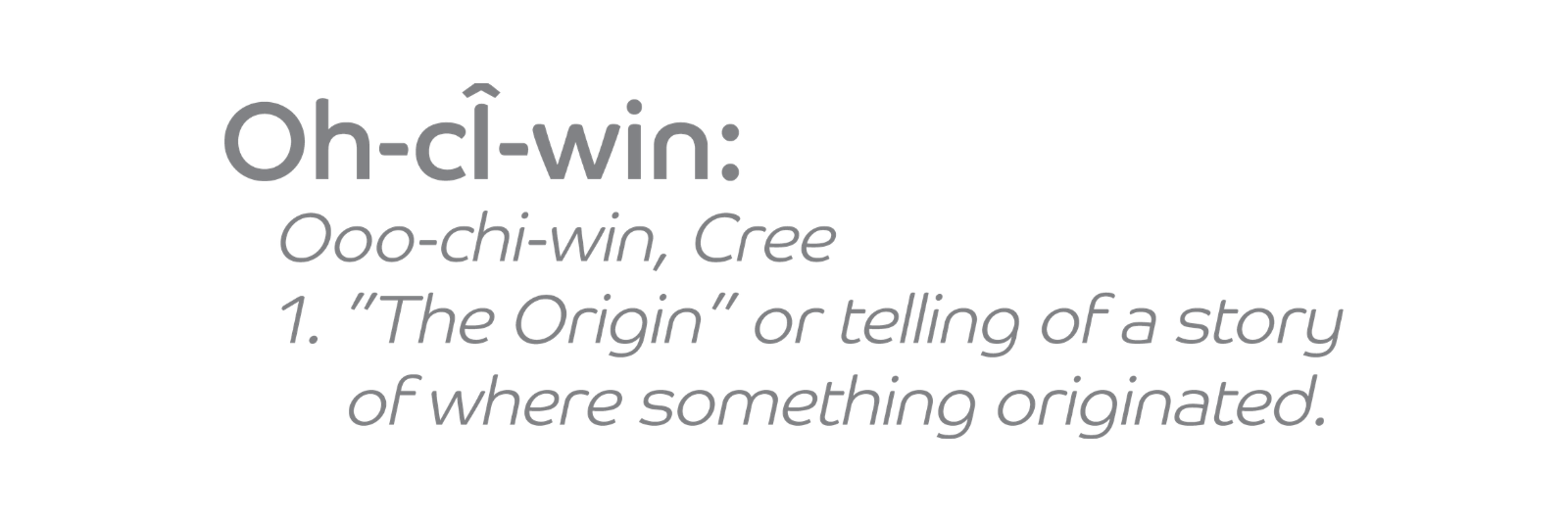
Ohcîwin is a Cree word meaning “The Origin” or telling of a story where something originated.
Photo credits: (1) Marrisa and Patrick, 2019 (2) Mens Grass, Regalia, Front, 2020 (3) Women's Fancy Dance, Regalia, Back, 2020
Exhibit Artists
Over 27 Indigenous artists created the Regalia and worked on the Ohcîwin Project. We've highlighted some of the artists below.

Image courtesy of the artist
All Cloth Work
Emery-rose Assiniboine – Dakota and Plains Cree
An artist, seamstress, student and mother, Emery-rose has been designing and creating beadwork with her grandmothers since she was 12 years old. She is from the Dakota Nation of Manitoba and the Neekaneet Cree Nation of Southern Saskatchewan. She is founder of Assinboine Designs which specializes in Indigenous wear that ranges from regalia to bead work.

Image courtesy of the artist
Men's Chicken Dance Beadwork
Morning Dove Kytwayhat – Cree
Morning Dove is a wife, mother and preschool teacher from Makwa Sahgaiehcan First Nations, Saskatchewan. Growing up, she was raised with traditional teachings from both her maternal and paternal grandparents. Her grandparents taught her to always have good energy when making anything. In the process of creating the men’s chicken dance beadwork she hopes that the person or people who see her beadwork will always feel that good energy.

Image courtesy of the artist
Ladies Traditional Beadwork
Nita McAdam - Cree
From Big River First Nations in Northern Saskatchewan, beading and sewing helps Nita deal with modern stress and connects her with traditional ways. She has always loved the Plains Cree style and wants to keep the style of her lineage going on with her children and others who admire her work.

Image courtesy of the artist
Featherwork
Eric Mentuck - Anishinaabe
Eric is from Waywayseecappo First Nations in Manitoba. Andrew Mecas taught Eric the time-consuming craft of bustle-making. If Eric could describe some characteristics that a future bustle-maker should have they are: patience, attention to detail, improvement, consistency, working long hours on continuous steps. Eric is an outdoor education teacher in Waywayseecappo who makes bustles for friends and family members. Eric is also a husband and father to four daughters and one son.

Image courtesy of the artist
Accessories
Curtis Miller Joe - Coast Salish
Curtis’ work in carving, painting, drum and dance displays a fierce pride informed by a deeply spiritual value system. A world-class Powwow dancer, Curtis
spends the summers competing throughout North America and the winters working with at-risk youth and as a family counselor.

Image courtesy of the artist
Mens Fancy Beadwork, Womens Jingle Beadwork, Mens Traditional Beadwork
Marrisa Mitsuing – Cree
A second generation Indian Residential School Survivor, Marrisa’s interest in the world of art and culture blossomed a er the birth of her first child, Leland. This led her on a healing journey to become a powwow dancer, which led her to an infatuation with regalia making.
She is inspired by the vast natural life surrounding her kokum’s (grandmother’s) backyard where she grew up, in a small community on Treaty 6 Territory. Marrisa’s passion is now connecting communities to Indigenous History through dance and traditional beadwork.
Marrisa currently resides in Sylvan Lake, Alberta with her husband Patrick and their four children.

Image courtesy of the artist
Head Roaches
Yahsti Perkinskiller - Waccamaw, Dakota
Yahsti learned traditional ways from his father. At 10 years old he was taught how to tie his own bustle; by 15 he beaded his own regalia. In 2014, he was ready to learn how to make the Wapesha (headdress) from legendary Wapehsa maker Richard Street. Now he is hoping to pass along this skill to his children.

Image courtesy of the artist
Men's Grass Dance Beadwork
Coralie Nepoose – Cree
Coralie, daughter of Charity and Levi Nepoose, is Plains Cree from the Samson Cree Nation. Coralie has been a fancy dancer since the age of 11. She beads all her own beadwork as well as that of her two daughters. For Coralie, it is an honour to be asked to be a part of something so big.

Image courtesy of the artist
Women's Fancy Dance Beadwork and Accessories
Alexandrea Pasquayak - Santee Dakota
Alexandrea began beading at the age of 12 and has been working at it through trial and error ever since. Her aunt Ursula Youngbear shared her gi of beading with Alexandrea. Her work, of small pieces to large orders of numerous dance regalia is worn with pride all over Canada and the U.S.

Image courtesy of the artist
Quilled Work
Kendra Roan – Plains/Chippewa Cree, T'suu T'ina and Taos Pueblo
Kendra grew up in Pigeon Lake, Alberta. She finds inspiration from her family as they all create some form of art, such as singing, dancing, beading or
painting. A powwow dancer herself, this quilled breastplate is her most challenging quillwork yet.

Image courtesy of the artist
Photographer
Marlon Weekusk - Cree
Marlon Weekusk is photographer and owner of Marmar Photography. Marlon is a Plains Cree grass dancer from Onion Lake Cree Nation, Saskatchewan. Marlon, also known as “Marmar”, participates in the Powwow circle and cultural events. The images and ideas captured by Marmar are a representation of how he views aspects of cultural practice and its preservation through art and imagery. The images here are some of the favorites he has captured on the Powwow Trail. “The idea of being able to do my part in preservation of culture and memories is priceless for future generations.
Exhibit Sponsors
Proudly brought to Camrose by the City of Camrose and the Camrose Centennial Museum Society in recognition of the 150th anniversary of the signing of Treaty 6 between First Nations and the Crown.
We are all Treaty people.
Exhibition organized and toured by the Red Deer Museum + Art Gallery (MAG, Red Deer, AB). The MAG acknowledges the generous funding support provided by the City of Red Deer, Alberta Foundation for the Arts, Alberta Museums Association, Waskasoo Museum Foundation and Marguerite Lerouge Watson.
The City of Camrose is a Municipality located on Treaty 6 territory, the traditional lands of the Indigenous and the Métis People.
For as long as the sun shines, the rivers flow, and the grass grows, this land will be recognized as Treaty 6 Territory.


